
Trading resources are the tools, templates, platforms, and reference materials that prop traders use to plan, execute, and review their trades. The difference between a prepared trader and an unprepared one usually comes down to whether they have the right tools set up before the market opens.
From trading journals to platform selection, from risk spreadsheets to economic calendars, here is every resource a prop trader needs to trade effectively and pass evaluations consistently.
Key Takeaways
- A trading journal is the single most impactful tool for improving your trading performance over time.
- Platform selection depends on your market: MetaTrader for forex, NinjaTrader for futures, TradingView for analysis.
- Risk spreadsheets and planning templates help you calculate positions and track drawdown before every session.
- An economic calendar prevents accidental rule breaches during restricted news periods.
- The best resources are the ones you actually use consistently, not the ones that look impressive.
On This Page
Trading Journals: The Tool Every Trader Needs
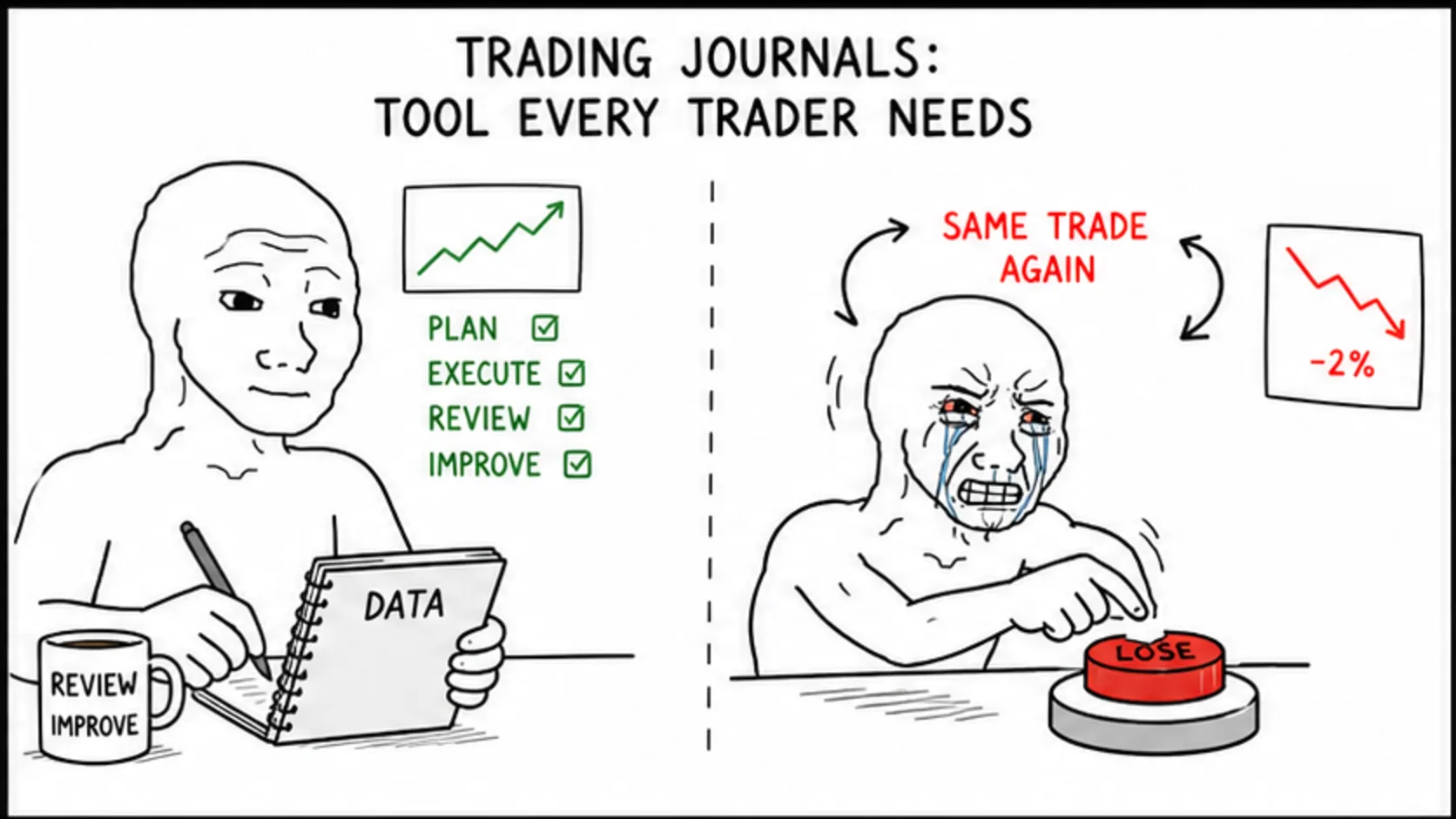
A trading journal is the single most impactful tool for improving your performance. It records every trade, the reasoning behind it, and the outcome. Over time, patterns emerge that reveal exactly where you are losing money.
Most traders resist journaling because it feels tedious. Writing down every trade takes discipline, especially after a losing day when the last thing you want to do is document your mistakes.
But the data is invaluable. After 100 journal entries, you can identify which setups work best for you, which times of day are most profitable, and which emotional states lead to bad decisions.
The minimum information to record per trade: entry time, instrument, direction, position size, stop loss, take profit, entry reason, exit price, PnL, and a one-sentence note on how you felt before placing the trade.
Digital journals like TradeZella or Edgewonk offer analytics that spreadsheet journals cannot match. They show your win rate by day of week, by session, by setup type, and by emotional state.
Trading Plan Templates
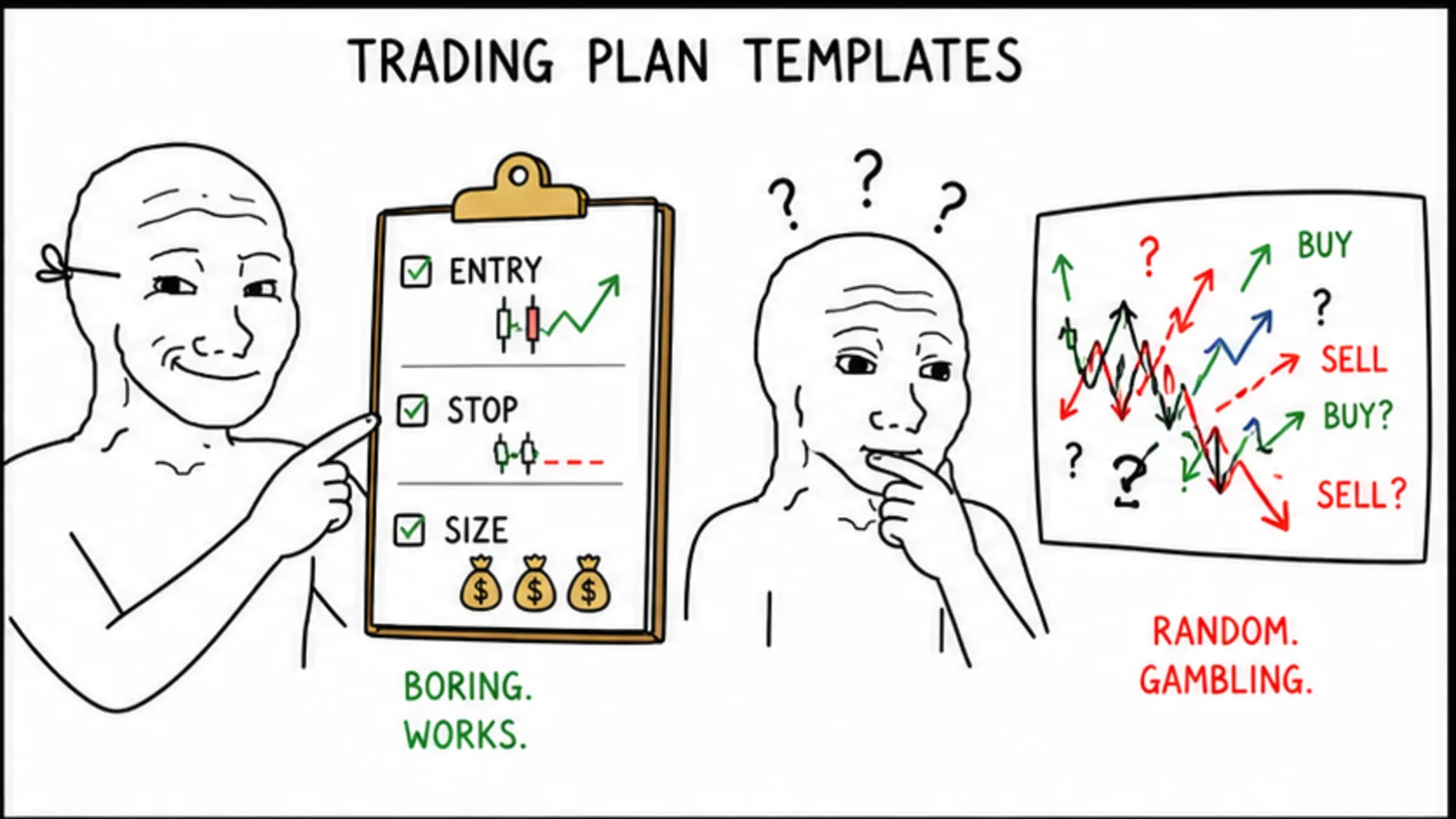
A trading plan template forces you to define your strategy, risk parameters, and rules before you start trading. Without one, you are improvising, and improvisation under pressure leads to expensive mistakes.
Your trading plan should include: your trading hours, your setup criteria, your risk per trade, your maximum daily trades, your daily loss walk-away point, and your rules for the specific prop firm you are trading with.
The plan does not need to be complex. One page is enough. The point is that you make decisions when you are calm and rational, not when you are staring at a moving chart with money on the line.
Read your trading plan before every session. It takes 60 seconds and reminds you of the rules you committed to when you were thinking clearly.
Challenge Checklists
A challenge checklist ensures you do not miss any preparation steps before starting an evaluation. The last thing you want is to fail a challenge because you forgot a rule you could have caught in advance.
Your checklist should include: reading all firm rules, understanding the drawdown calculation method, knowing the news trading restrictions, setting your platform timezone correctly, and testing your order execution on a demo first.
Include a daily checklist too: check current drawdown, check daily loss remaining, check economic calendar for restricted news events, and review your trading plan before placing any trades.
The traders who pass on their first attempt are almost always the ones who used checklists. The ones who fail are the ones who winged it.
Trading Platforms for Prop Traders
Your trading platform is where you spend hours every day. Choosing the right one matters for your efficiency, analysis, and execution quality.
For forex prop firms, MetaTrader 4 and MetaTrader 5 are the industry standard. Most firms support one or both. MT4 is simpler and more widely used. MT5 has more advanced charting and additional order types.
cTrader is another popular option for forex traders. It offers a cleaner interface, better charting tools, and faster execution than MetaTrader. Some traders prefer it, but it is not supported by all prop firms.
For analysis across all markets, TradingView is the most versatile platform available. It supports custom indicators, advanced charting, and social features for sharing analysis.
Futures Trading Platforms
Futures trading requires different platforms than forex. The most popular options for prop traders are NinjaTrader, TopstepX, and proprietary platforms offered by futures prop firms.
NinjaTrader is the industry standard for futures analysis and execution. It offers advanced charting, custom indicators, and automated trading capabilities. The learning curve is steeper than MetaTrader but the tools are more powerful.
TopstepX is the proprietary platform from Topstep, one of the oldest futures prop firms. It is designed specifically for prop trading evaluations and includes built-in risk management tools that track your drawdown in real time.
Project X is a newer platform gaining popularity among futures prop traders for its speed and clean interface. It is worth testing if your firm supports it.
TradingView for Prop Traders
TradingView is the best platform for technical analysis regardless of which broker or prop firm you trade with. It runs in your browser, supports every market, and has the largest library of custom indicators.
TradingView indicators built for prop traders can display your drawdown limits directly on your chart. Some indicators show your daily loss limit as a horizontal line that updates as your PnL changes throughout the day.
The free tier of TradingView is sufficient for most analysis. The paid tier adds more indicators per chart, custom timeframes, and faster data refresh rates.
Many prop traders use TradingView for analysis and their broker platform for execution. This separation keeps your analysis clean and your execution focused.
Best VPS for Trading
A Virtual Private Server (VPS) keeps your trading platform running 24/7 without depending on your local internet connection or computer.
VPS is most useful for traders who use automated strategies or need to hold positions overnight without worrying about their home internet disconnecting during a critical market move.
The best trading VPS providers offer low latency to your broker's servers. For forex traders, look for VPS servers located in London or New York, where most forex brokers have their servers.
Most prop traders do not need a VPS. If you are manually trading during specific sessions and closing all positions before you stop, a VPS is unnecessary. It becomes valuable only when you need persistent platform uptime.
Economic Calendars
An economic calendar is essential for prop traders because of news trading restrictions. If your firm prohibits trading during high-impact news events, you need to know exactly when those events occur.
Check the calendar at the start of each trading week. Highlight any high-impact events that fall during your trading hours and plan your schedule around the restricted windows.
The most important events for prop traders are Non-Farm Payrolls (first Friday of each month), Consumer Price Index releases, Federal Reserve interest rate decisions, and GDP reports.
Some prop firms provide their own economic calendars with the restricted events highlighted. If yours does, use it. It is calibrated to their specific rule definitions.
Best Trading Books for Prop Traders
Trading books provide the foundational knowledge that most courses skip. The best books for prop traders focus on risk management, psychology, and market structure rather than specific strategies.
Trading in the Zone by Mark Douglas is the most recommended book for prop traders. It addresses the psychological barriers that cause traders to abandon their rules under pressure.
Market Wizards by Jack Schwager is a collection of interviews with successful traders. It shows the diversity of approaches that can work, which helps you understand there is no single correct way to trade.
Technical Analysis of the Financial Markets by John Murphy is the reference text for chart analysis. If you want to understand support, resistance, trends, and patterns, this is where to start.
The best time to read trading books is before you start trading, not during a losing streak. Build your knowledge foundation when you are calm and receptive, not desperate for a fix.
Rules Checklist Before Every Session
Before every trading session, run through this checklist to ensure you are prepared and within all limits.
Check your current account equity. Calculate your remaining drawdown room. Calculate your remaining daily loss room. Check the economic calendar for restricted news events. Review your trading plan for the session.
Set your position size for the day based on your remaining risk budget. If you have less room than usual, reduce your position size proportionally.
Decide your maximum number of trades for the day before you start. Write it down. When you hit that number, close the platform regardless of what the market is doing.
Set an alarm for your session end time. Do not trade past your planned end time, even if you see a setup. The best setups at the end of a session are the ones that cause late-day rule breaches.
The traders who follow this checklist every single day are the ones who pass evaluations and keep their funded accounts. The traders who skip it are the ones who keep buying challenges and wondering what went wrong. Use the free calculators, know your rules, and prepare before every session like your funded account depends on it. It does.
