
You are searching for a no KYC prop firm because you want to trade without handing over your personal documents. Fair enough. But here is what you need to understand before you go down this road. Most legitimate prop firms require identity verification at some point. The ones that do not are either too new to have proper procedures or are not firms you should trust with your money.
Key Takeaways
- Most legitimate prop firms require KYC at some point, usually before your first payout or funded account upgrade.
- Firms that never verify your identity are higher risk and may not process real payouts.
- KYC is standard in the financial industry. It protects both you and the firm from fraud.
- You can often start trading evaluations without KYC, but you will need it before withdrawing money.
- If privacy is your concern, look for firms that verify identity but do not share your data with third parties.
On This Page
What Does No KYC Actually Mean
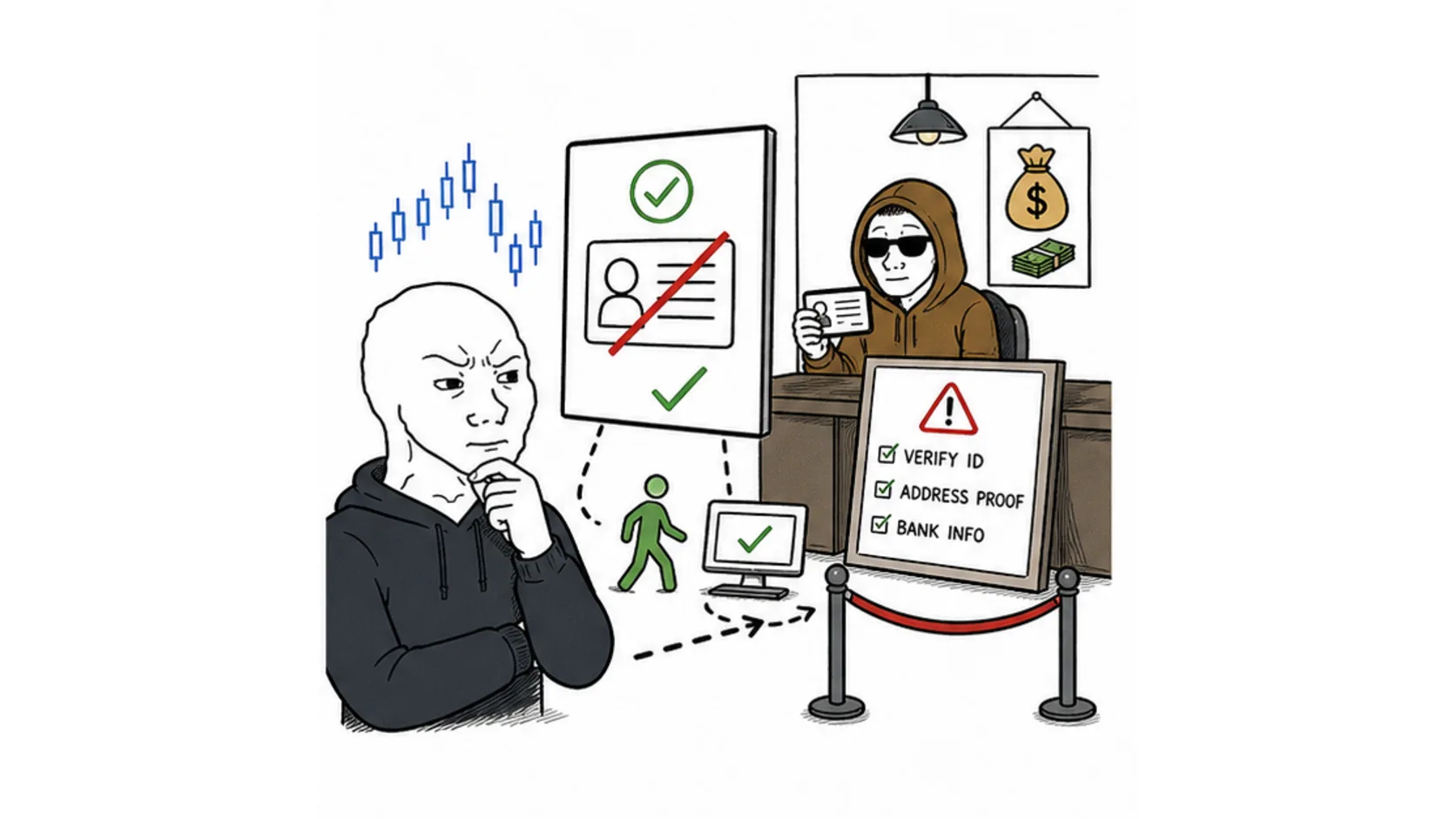
KYC stands for Know Your Customer. It is the process where a financial service verifies your identity before doing business with you. In prop trading, that usually means uploading a passport or driving licence and a proof of address document.
When traders search for "no KYC prop firm," they are looking for a firm that lets them trade without providing identity documents. The reasons vary. Some traders value privacy. Some do not have the required documents. Some are in countries where identity verification services do not work well.
Here is the important distinction. A firm that does not require KYC at signup is common. Many firms let you buy an evaluation and start trading without verifying your identity first. A firm that never requires KYC at any stage is rare and risky.
The KYC process is straightforward at most firms. Upload your documents, wait 1 to 3 business days, and you are verified. Most firms use third-party verification services that check your documents automatically.
Why Legitimate Firms Require KYC
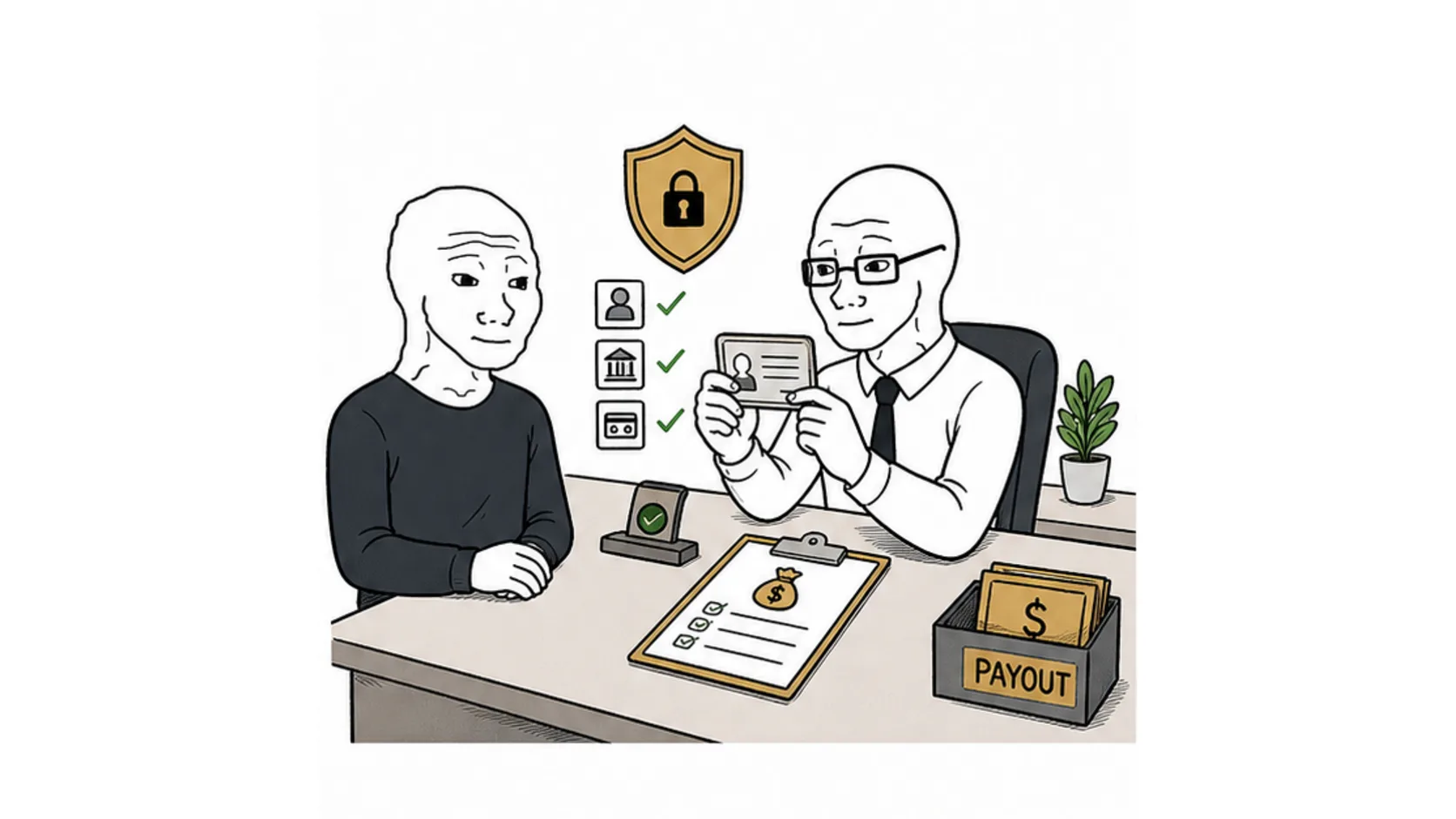
KYC is not a prop firm invention. It is a global financial regulatory requirement that applies to any company processing financial transactions.
When a firm sends you money, they need to know who you are. This prevents money laundering, terrorist financing, identity theft, and fraud. The Financial Conduct Authority in the UK and equivalent regulators worldwide require financial firms to verify customer identity.
If a prop firm processes payouts without verifying who they are paying, they are violating anti-money laundering regulations. That is not a grey area. That is illegal in most jurisdictions.
Prop firms that are serious about their business know this. They require KYC because they have to, not because they want to make your life difficult. The firms that skip it are the ones cutting corners, and firms that cut corners on compliance tend to cut corners on payouts too.
According to the National Futures Association, identity verification is a baseline requirement for any entity handling customer funds in the US futures market. Prop firms operating in this space follow similar standards.
Do Any Prop Firms Operate Without KYC
Some do, with caveats. Here is the landscape.
Firms that delay KYC until payout. This is the most common setup. You sign up with just an email, buy an evaluation, and start trading. No documents needed. But when you pass the challenge and get funded, or when you request your first payout, KYC is required.
This is how most firms operate. It reduces friction at signup while still meeting compliance requirements before money changes hands.
Firms that never require KYC. These exist, but they are rare and usually very small. If a firm processes real payouts without ever verifying identity, they are either operating in a regulatory blind spot or they are not processing real payouts at all.
Some of these firms pay out in cryptocurrency only, which has historically had lighter KYC requirements. But even crypto exchanges are now required to verify users in most countries.
Firms with minimal KYC. Some firms require only basic information (name, email, country) and a phone number verification but no document upload. This is lighter than full KYC but still provides some identity trail.
The no KYC prop firm you are looking for probably falls into one of these categories. Understanding how funded accounts work includes understanding that the money side of the equation requires identity verification.
KYC at Signup vs KYC at Payout
The timing of KYC matters more than most traders realise.
KYC at signup. Some firms verify your identity before you can even buy an evaluation. This is stricter but means everything is sorted upfront. When you pass the challenge and get funded, there are no surprises.
KYC before funding. Most firms verify you between passing the challenge and receiving your funded account. This is the standard approach. You trade the evaluation without KYC, pass it, then get verified before the funded account is created.
KYC at first payout. A few firms let you get all the way to funded without KYC and only verify you when you request your first withdrawal. This is the most flexible for the trader but creates risk. If your documents fail verification at payout time, you lose everything you earned.
The safest approach: complete KYC as early as possible. Get it done before you even start trading. If there is a problem with your documents, you find out immediately, not after weeks of profitable trading on a funded account.
The Risks of Using No KYC Prop Firms
If you choose a firm with minimal or no KYC, you are accepting specific risks that funded traders at verified firms do not face.
Payout risk. The biggest one. If the firm does not verify who you are, they also do not have the compliance infrastructure to process real payouts reliably. Firms that skip KYC often skip other compliance measures too.
Firm stability. Firms that operate without KYC tend to be smaller, newer, and less established. They have not invested in the infrastructure that makes a prop firm sustainable. When the market turns or they run into financial trouble, they are more likely to close overnight.
Account security. Without KYC, anyone can open an account. That means shared accounts, stolen credit cards, and fraudulent traders are all operating on the same platform. The firm's risk management is weaker, which means the platform itself is less stable.
No regulatory protection. If a no KYC prop firm disappears with your money, you have no regulatory body to complain to. You were never a verified customer. There is no paper trail. The firm can argue you never existed.
The payout question is the one that matters most, and firms that skip identity verification do not have a strong track record of reliable payouts.
Red Flags That Signal a Problem
When you are evaluating a no KYC prop firm, watch for these specific warning signs.
No payout proof from real traders. Every legitimate firm has payout screenshots, community posts, and third-party verification of payments. If a firm has zero payout evidence, assume they do not pay.
Only crypto payouts. Firms that only pay in crypto and never require KYC are operating in the least regulated corner of the market. Some are legitimate, but many are not.
No company information. If you cannot find a registered company name, a physical address, or any information about who runs the firm, that is a problem. Legitimate businesses are transparent about who they are.
Poor or non-existent support. If the only way to contact the firm is through a Discord server or Telegram group, they are not set up for serious business. Real prop firms have proper support channels and response times.
Unrealistic profit splits or rules. A firm offering 100% payout with no KYC and no evaluation is not being generous. They are not planning to pay you. The economics do not work.
What to Do If You Cannot Complete KYC
Some traders search for no KYC prop firms because they genuinely cannot complete verification. Here are the common reasons and what you can do about them.
You are under 18. No legitimate prop firm allows underage traders. This is a hard legal requirement. Wait until you are 18 and use the time to practice on demo accounts and build your strategy.
You do not have a valid ID. Apply for one. A passport or national ID card works at every firm. The process takes a few weeks in most countries but it is worth doing regardless of prop trading.
Your documents are in a language the firm does not support. Some firms accept documents with certified translations. Contact support before signing up and ask what they accept.
Verification services do not work in your country. Some third-party KYC providers have limited coverage. Look for firms that accept manual document review instead of automated verification.
Privacy concerns. If you are worried about data security, look for firms that use reputable KYC providers (like Onfido, Sumsub, or Jumio) and have clear data protection policies. Your documents are safer with a regulated firm than with an anonymous one.
The Reality Check
The no KYC prop firm you are looking for either does not exist in the form you want, or it comes with risks that make it not worth using.
Legitimate firms verify identity because they have to. The ones that do not are cutting corners, and in this industry, cut corners eventually catch up with everyone.
Your best option is to pick a firm that requires KYC, get your documents sorted, and focus on what actually matters: passing the evaluation and getting funded. The KYC step takes 10 minutes of your time and 1 to 3 days of processing. It is not the barrier you think it is.
If a firm is willing to let you trade without knowing who you are, ask yourself why. What does that say about how they treat their funded traders, their risk management, and their payouts?
The answer is usually nothing good.
