
Do prop firms actually pay out? This is the single most common question I get, and I understand why. You are about to hand over real money to a company you found on the internet, and they are promising to pay you even more money back if you can trade profitably on a demo account. Sounds like a scam waiting to happen. Except the established firms actually do pay. I know because I have been on both sides of it. I have failed challenges and lost my fee, and I have passed challenges and received payouts that hit my bank account. Here is what is really going on.
Key Takeaways
- Established prop firms like FTMO, Topstep, FundedNext, and Apex Trader Funding have verified payout records and have paid millions to funded traders.
- Only about 5-10% of traders pass evaluations, and approximately 7% of all traders who buy challenges ever receive a payout.
- Payouts are real money, but the trading happens on simulated accounts. The firm pays you from its operating revenue.
- Firms can and do deny payouts for rule breaches. Understanding the rules before you start is critical.
- Always verify a firm's payout history through independent sources before buying a challenge.
On This Page
The Short Answer
Yes, established prop firms actually pay out. This is not in dispute. FTMO has published payout certificates totalling over $200 million since it launched. Topstep has paid out over $15 million to funded futures traders. FundedNext has a public payout dashboard showing thousands of verified payments. These are real money transfers hitting real bank accounts.
I have received payouts from prop firms. Multiple times. The money arrived. The process worked. This is not me guessing or reading marketing material. This is me telling you what happened when I followed the rules, hit the profit target, and requested my share.
But here is the part the marketing does not mention. The vast majority of traders who buy challenges never see a payout. Not because the firm refused to pay, but because the trader never made it to the payout stage. The evaluation process is designed to filter out traders who cannot manage risk, and it does that job very effectively.
The Numbers: What Percentage of Traders Actually Get Paid
Let me hit you with the real statistics, because this is where the dream meets reality.
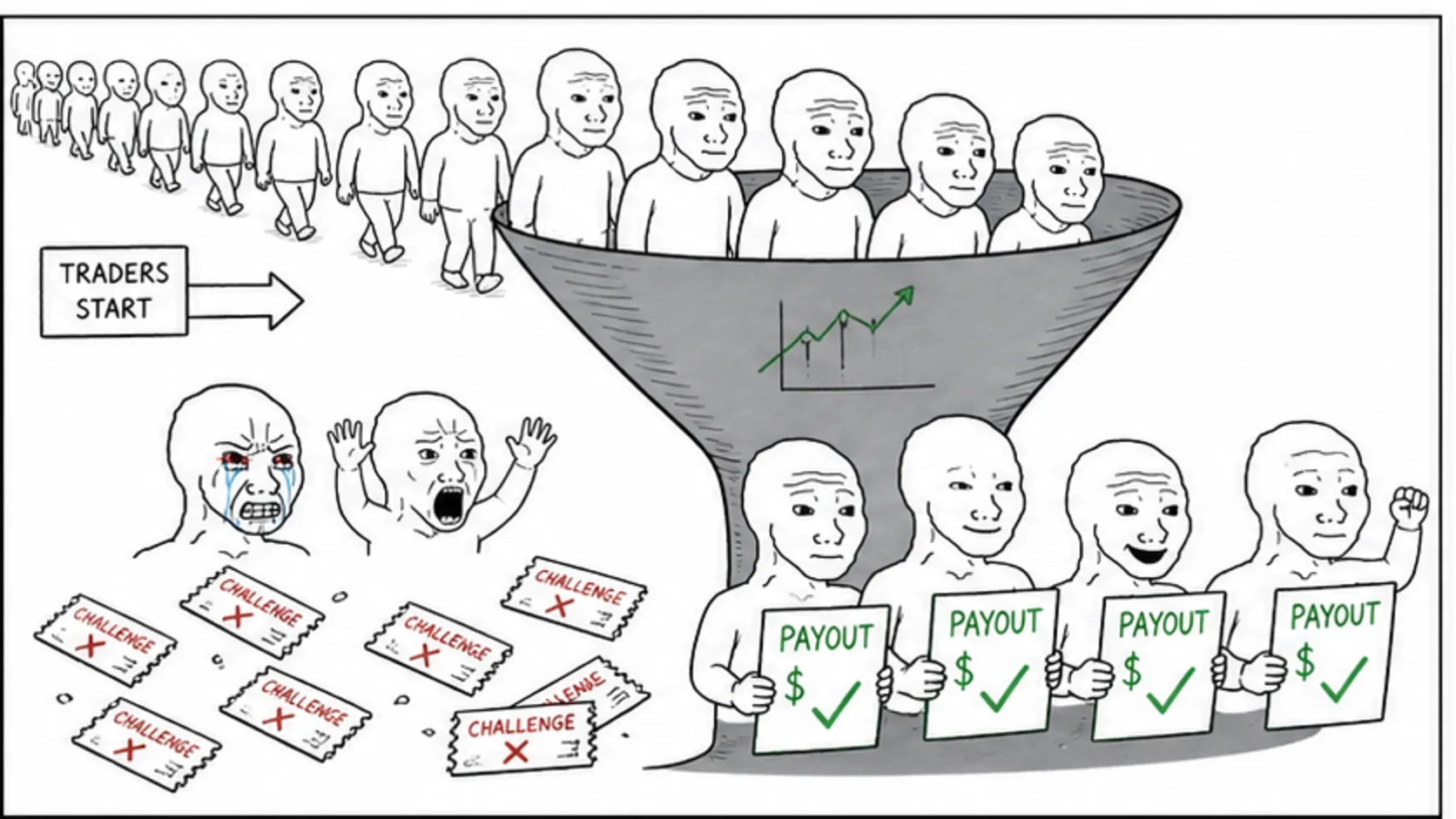
According to data compiled by QuantVPS and other industry analysts, only about 5% to 10% of traders pass the initial evaluation phase. And of those who pass, not all of them maintain profitability long enough to request a payout. The combined result is that approximately 7% of all traders who purchase a prop firm challenge ever actually receive a payout.
That means 93 out of 100 traders who buy a challenge walk away with nothing. Some of them fail the challenge. Some of them pass but blow up their funded account before requesting a payout. Some of them get denied for a rule violation. The full breakdown of payout percentages by stage shows exactly where traders drop out. The firm keeps the evaluation fee in almost every case.
This is the business model. The firm makes money from the 93% who fail, and pays out a share of profits to the 7% who succeed. The model is sustainable because the revenue from failed challenges far exceeds the payouts to successful traders.
You might think this sounds rigged. It is not rigged. It is a filter. The challenge rules exist to identify traders who can generate profits while managing risk. Most people cannot do this consistently. That is not the firm's fault. That is the reality of trading.
Which Prop Firms Have the Best Payout Records
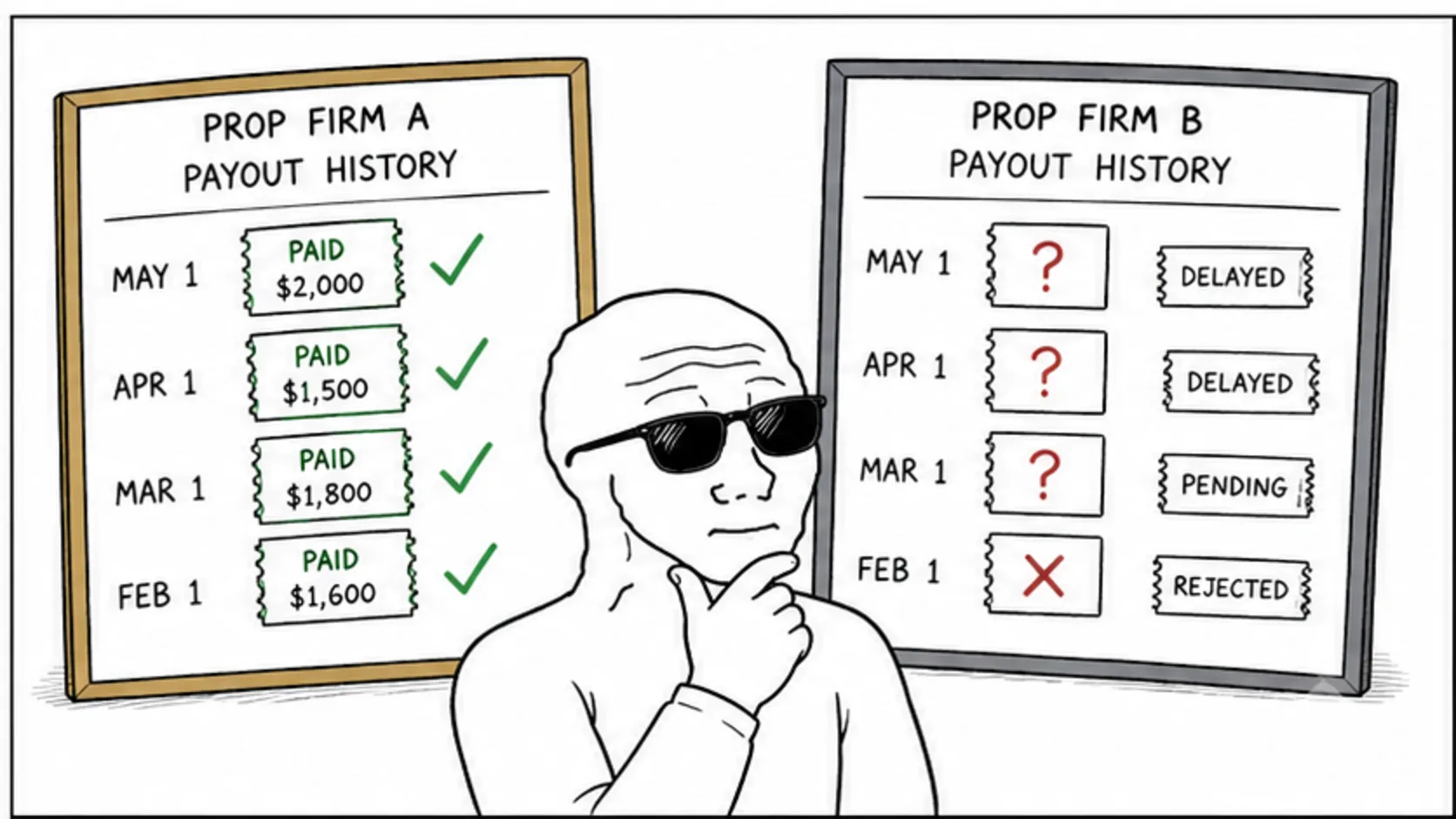
Not all prop firms are equal when it comes to payouts. Some have years of verified payment history. Others launched last Tuesday. Here is where the top-paying prop firms stand.
FTMO (Get the full PassPropTradingFirms FTMO review). Industry standard for payout reliability. Over $200 million in verified payouts since 2015. Payout certificates are publicly available on their website. Processing time is typically 1-2 business days for bank transfers. Profit split starts at 80% and scales to 90%. Legendary tier for payout trust.
Topstep. The gold standard for futures prop payouts. Over $15 million paid out to funded traders. Payouts process within 1-3 business days. First payout is 100% of profits, then 90% going forward. They actively promote their payout statistics because the numbers speak for themselves.
FundedNext. Known for fast payouts and generous profit splits. They offer up to 95% profit split for experienced funded traders. Payout processing is usually within 24-48 hours. Their public dashboard shows real-time payout data.
The5ers. Solid payout record with a focus on forex. They offer instant payouts for some account types and have been operating since 2016. Profit split ranges from 80% to 100% depending on the account stage.
Apex Trader Funding. Major player in the futures space with substantial payout volumes. They have paid out tens of millions to funded traders, though their payout process involves an activation fee and can take longer than some competitors.
These firms have something in common: they have been operating for years, they publish payout data, and you can find independent payout confirmations on Reddit and Trustpilot without looking very hard. That is what legitimacy looks like in this industry.
How Prop Firm Payouts Actually Work
Let me walk you through what happens when you actually request a payout, because the mechanics matter.
You pass your challenge. You get your funded account. You trade profitably for a payout cycle, which is usually biweekly or monthly depending on the firm. You generate, say, $3,000 in simulated profits. You request a payout through the firm's dashboard.
The firm reviews your trading activity. They check that you did not breach any rules during the payout period. They verify that your trading style is consistent and that you did not use any prohibited strategies. This review process can take anywhere from a few hours to several business days.
If everything checks out, the firm pays you your share. On an 80% profit split, that is $2,400. The payment arrives via bank transfer, crypto, or whatever method the firm supports. The payout is real money in your account.
Where does that money come from? Not from your specific trades, because you were trading on a simulated account. The money comes from the firm's operating revenue, which includes evaluation fees from traders who failed, profit splits from other funded traders, and the firm's own capital allocation.
This is the part that confuses people. "Wait, if I am trading a demo, where does the real payout money come from?" It comes from the firm. The firm has decided that paying you a share of simulated profits is a worthwhile business expense because it keeps you trading, generates marketing material, and maintains the ecosystem that attracts new traders who pay evaluation fees.
Is this sustainable? For established firms with diversified revenue streams, yes. For firms that rely entirely on evaluation fees with no other capital behind them, the math gets wobbly when growth slows down. This is why some firms collapse while others keep paying for years.
Why Some Traders Never Get Paid
You knew this section was coming. Here is where most payout dreams die.
Reason one: you never pass the challenge. The most common reason traders do not get paid is that they never make it past the evaluation. The profit target is too ambitious, the daily loss limit gets breached, or the trader simply cannot generate consistent profits within the time limit. The firm keeps the evaluation fee. End of story.
Reason two: you pass the challenge but blow the funded account. This happens more than you would think. Traders pass the evaluation by trading carefully, then immediately change their behaviour on the funded account because they feel like they have "made it." They size up. They take worse setups. They revenge trade after a loss. The funded account has the same rules as the challenge, but the psychological environment is completely different. The average funded trader loses their account within six weeks.
Reason three: you breach a rule you did not fully understand. Firms deny payouts for rule violations. Not just the obvious ones like exceeding the daily loss limit. Less obvious violations include violating the consistency rule, trading during restricted news events, holding positions over the weekend when it is not allowed, or using trading patterns that the firm considers prohibited. If you did not read the full terms before you started trading, you might break a rule without knowing it exists.
Reason four: you picked a firm that does not actually pay. Not every prop firm is legitimate. Some firms process small payouts early on to build trust, then stop paying when the math catches up with them. Others have vague payout terms that give them broad discretion to deny any request. If you cannot find independent payout verification from multiple sources, you are taking a risk with your evaluation fee.
How to Verify a Prop Firm Pays Out Before You Buy
You have three missions before you hand over your credit card. Non-negotiable.
Mission one: check the firm's public payout records. Established firms publish payout certificates, payout statistics, or payout dashboards on their websites. Look for these. If a firm has been operating for more than a year and has no public payout data, ask yourself why.
Mission two: search Reddit, Trustpilot, and Forex Peace Army for independent payout confirmations. Not testimonials on the firm's own website. Real posts from real traders showing bank transfer confirmations or crypto transaction receipts. You are looking for consistent, recent payouts from multiple different traders, not a single screenshot from two years ago.
Mission three: check the payout terms and conditions before you buy. Look specifically for payout frequency, minimum payout amounts, payout processing times, and any conditions that could delay or deny your payout. A firm that has clear, specific payout terms is more likely to honour them than a firm with vague language about processing times.
One more thing. Pay attention to the firm's age. Firms that have been paying out consistently for two or more years have proven their business model works. Firms that launched three months ago and are already offering 95% profit splits and same-day payouts might be legitimate, or they might be burning through evaluation fee revenue to build hype before the math collapses. Time is the filter that separates sustainable firms from the rest.
Do prop firms actually pay out? The established ones do, every day. But they are paying the 7% who took the time to learn the rules, manage their risk, and treat the challenge like a professional evaluation rather than a lottery ticket. The payout proof is out there. Your job is to earn your way into that 7%.
